


Community advocacy delivers stronger protections for the Northern Transmission Line
The Northern Terminal to Neerabup Terminal 330kV Transmission Line is intended to strengthen Perth’s northern electricity network and support the transition to renewable energy.
UBC recognised the importance of this infrastructure, while insisting that clean energy should not come at an unnecessary cost to the Swan Coastal Plain’s remaining bushland.
During the EPA’s public review in December 2025, UBC raised concerns about clearing within Banksia and Tuart woodlands, Bush Forever sites and the Gnangara–Moore River State Forest. The proposal then provided for clearing up to 124.63 hectares of native vegetation. Our submission called for greater avoidance, transparent consideration of alternatives, clearly defined and deliverable offsets, and stronger recognition of cumulative habitat loss.
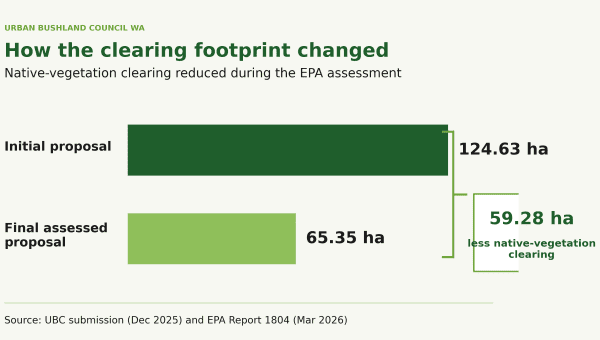 The assessment process produced substantial improvements. The EPA recorded a 59.28-hectare reduction in proposed native-vegetation clearing, bringing the final assessed maximum to 65.35 hectares. Overall vegetation disturbance fell from 185.39 to 97.72 hectares.
Design changes included greater use of spanning to retain lower-growing vegetation, a commitment not to clear suitable or confirmed black cockatoo nesting trees, and stronger clearing limits, rehabilitation requirements and offsets.
Importantly, the EPA acknowledged that public submissions and agency advice contributed to further mitigation and revised offset arrangements.
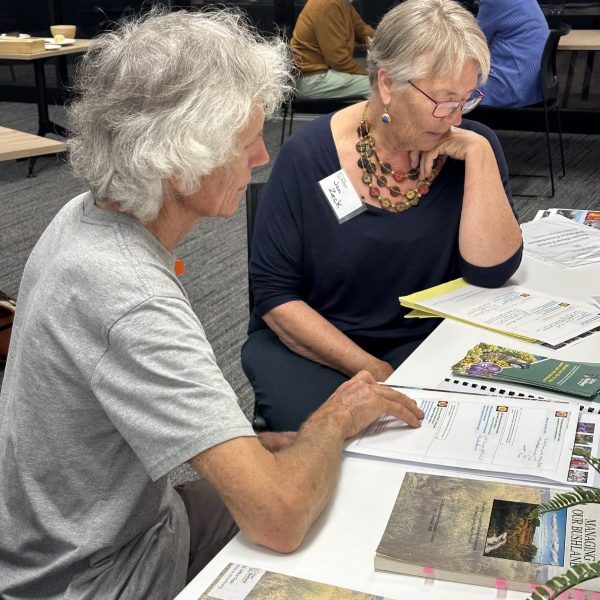
Although these were significant gains, UBC considered that further safeguards were needed. We appealed EPA Report 1804 in April 2026, seeking clearer proof that avoidance had been maximised, earlier certainty and legal protection for offset sites, and more transparent performance reporting. We continued this advocacy through a detailed response to the EPA’s report to the Appeals Convenor.
The Appeals Convenor acknowledged that greater public transparency about avoidance would have improved confidence in the assessment and recommended strengthening the timing of legal security for offset land. In July 2026, the Minister allowed UBC’s appeal in part, reducing the period for securing offset land by conservation covenant from 15 months to 12 months.
 This was not everything UBC sought, but it was a meaningful result.
Around 59 hectares of native vegetation were removed from the proposed clearing footprint, environmental conditions were strengthened, and our appeal secured a further improvement.
The process reinforces three lessons: avoidance must be demonstrated, not merely described; past infrastructure approvals should not set the ceiling for environmental performance; and conditions must be judged by the outcomes they deliver.
Thank you to everyone whose expertise, persistence and support made this advocacy possible.